
What Is Advent? Meaning, History, Dates & Traditions
Discover the meaning of Advent, when it starts, its historical development, candle wreaths, printed calendars, and how different traditions mark the season before Christmas.
Advent can be confusing. Some people know it as the four Sundays before Christmas. Others know it from chocolate-filled Advent calendars or candles on a wreath. If you have ever wondered when Advent starts, what it means, or why people celebrate it, you are not alone.
Advent is a Christian season of preparation and expectation before Christmas. It looks back to the coming of Jesus Christ at his birth and, in many Christian traditions, also looks forward to his promised return. The word comes from the Latin adventus, meaning "coming" or "arrival."
As you prepare for the holidays, you can also learn about other classic winter greenery traditions in our guide to why we use holly and mistletoe at Christmas.
Advent is the four-Sunday Christian season before Christmas. It is a time of preparation and expectation focused on Jesus Christ's coming at Christmas and, in many Christian traditions, his promised Second Coming. The word Advent comes from the Latin adventus, meaning "coming" or "arrival."
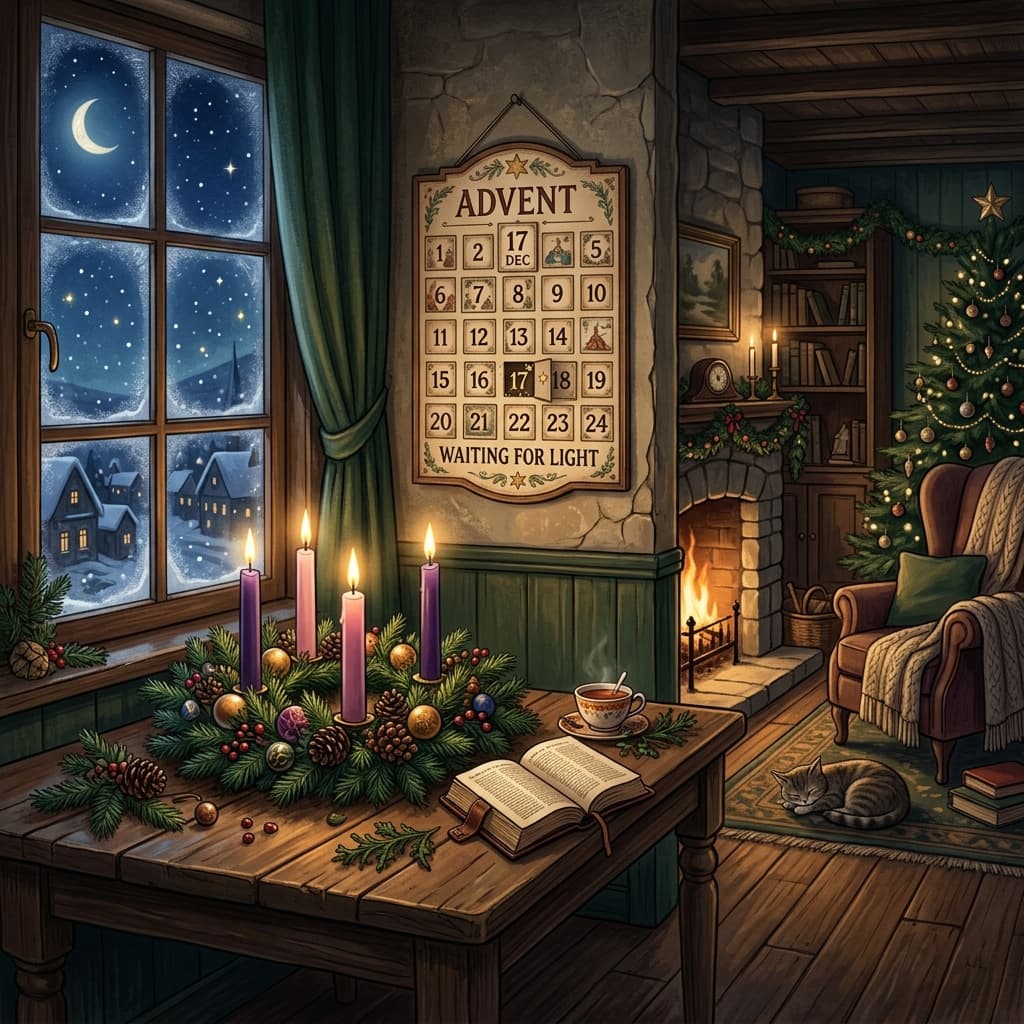
Advent represents the season of quiet expectation, lit candles, decorated wreaths, and calendars counting the days leading to Christmas.
What Is Advent?
Advent is the season of the Christian year that leads up to Christmas. In Western Christian traditions, it contains the four Sundays before Christmas and ends on Christmas Eve.
Advent is a time of waiting, preparation, reflection, and hope. Christians use the season to prepare for the celebration of Jesus' birth at Christmas. Many traditions also connect Advent with anticipation of Christ's Second Coming.
Liturgical Advent vs. Christmas Season
It is important to note that Advent is not the same thing as Christmas. A simple way to remember the difference is:
| Advent | Christmas |
|---|---|
| Comes before Christmas | Begins with Christmas |
| A season of preparation | A season of celebration |
| Focuses on expectation | Focuses on the birth of Jesus |
| Includes four Sundays | Traditionally extends beyond one day |
| Often uses candles and wreaths | Often includes trees, gifts, and other customs |
In short: Advent is the waiting and preparation that leads to Christmas.
When Is Advent in 2026?
Advent 2026 begins on Sunday, November 29, 2026, and ends on Thursday, December 24, Christmas Eve.
The four Sundays during Advent 2026 are:
| Advent Sunday | Date in 2026 | Common Theme |
|---|---|---|
| First Sunday of Advent | Sunday, November 29, 2026 | Hope |
| Second Sunday of Advent | Sunday, December 6, 2026 | Peace |
| Third Sunday of Advent (Gaudete) | Sunday, December 13, 2026 | Joy |
| Fourth Sunday of Advent | Sunday, December 20, 2026 | Love or Peace |
| Christmas Eve | Thursday, December 24, 2026 | Liturgical Conclusion |
How Long Does Advent Last?
Advent always contains four Sundays, but the total number of calendar days can vary.
In the Western Christian calendar, Advent can last about three and a half to four weeks. The exact number of days changes because Christmas falls on different days of the week from year to year. Liturgical Advent can range from 22 to 28 days.
This is one reason people sometimes become confused when they see an Advent calendar with 24 doors. An Advent calendar is not a perfect calendar of every day of the liturgical Advent season; it is a practical countdown starting December 1.
What Does Advent Mean?
The word Advent means "coming" or "arrival." The English word comes from the Latin adventus, which means arrival or coming. In Christian use, the word points especially to the coming of Christ.
Advent has two connected ideas:
- First Coming: Remembering and celebrating Jesus' birth at Bethlehem.
- Second Coming: Looking forward in hope to the promised return of Christ.
This gives the season a dual past-and-future focus: remembering the historic Nativity while preparing for the future promised arrival.
What Is the History of Advent?
Advent developed gradually during the early centuries of Christianity. The history is not completely uniform because different Christian communities practiced preparation for Christmas in different ways.
Distinct periods of preparation for Christmas began appearing in parts of the Christian world during the fourth century, initially involving fasting, prayer, and religious observance. The length of the season changed over time before the Roman tradition stabilized the four-week Western Advent familiar today.
Advent Historical Timeline
Early Observances
Various local preparation periods for Christmas appear across Spain, France, and northern Italy, often focusing on baptism and spiritual preparation.
Roman Liturgy Development
The Church in Rome integrates Advent into its liturgical book, standardizing a preparatory season before the Feast of the Nativity.
Standardization of Four Sundays
The liturgical length of Western Advent is fixed at four Sundays, establishing the liturgical structure recognized today.
First Advent Wreath
German Lutheran pastor Johann Wichern creates a candle-lit wooden ring to help children count the days leading to Christmas, the precursor to modern wreaths.
Lang's Printed Advent Calendar
Gerhard Lang prints the first commercial countdown calendar in Germany with 24 pictures, launching the popular door-opening calendar tradition.
International Spread
Advent calendars and candle wreaths spread across Western Europe and North America, evolving into widely used secular and religious traditions.
A Global Anticipation Tradition
Advent is observed globally in churches, and calendar countdowns are celebrated both religiously and culturally.
What Do the Advent Candles Mean?
Advent candles mark the four Sundays of Advent and symbolize the growing expectation of Christmas. Wreaths traditionally hold four candles, with one lit on each Sunday of Advent. In some traditions, a fifth white candle (the Christ Candle) is placed in the center and lit on Christmas Eve or Christmas Day.
Advent Wreath & Candle Symbols
The Candle of Hope
Represents anticipation and waiting in hope for the promised Messiah.
The Candle of Peace
Represents preparation, path-clearing, and finding spiritual peace.
The Candle of Joy
Represents rejoicing on Gaudete Sunday, marking a transition toward the celebration.
The Candle of Love
Represents God's love and the final steps leading directly to Christmas.
Why is the third candle pink? The rose color indicates Gaudete Sunday (from the Latin for "rejoice"). It highlights a shift in focus from reflection to joy as Christmas draws near.

An evergreen Advent wreath with three purple candles and one rose candle glowing in a warm, cozy room setting.
What Is an Advent Wreath?
An Advent wreath is a circular arrangement of evergreen branches holding four candles. The circle symbolizes God's endless love (having no beginning or end), and evergreens represent enduring life through winter.
The modern wreath was popularized in Germany by Lutheran pastor Johann Wichern in 1838. He used a wooden ring decorated with small red candles and large white candles to help orphaned children count the days to Christmas. Over time, it was simplified to the four-candle version used in homes and churches today.
What Is an Advent Calendar?
An Advent calendar is a tool used to count down the days leading up to Christmas. Modern calendars usually have 24 doors or pockets opened from December 1 through December 24, often revealing pictures, chocolates, or toys.
Early German countdown customs included chalk marks on doors or lighting candles daily. The printed Advent calendar emerged in the early 20th century. German printer Gerhard Lang is credited with producing an early printed version in 1908. The tradition spread globally and today includes both religious scriptures and secular treats.
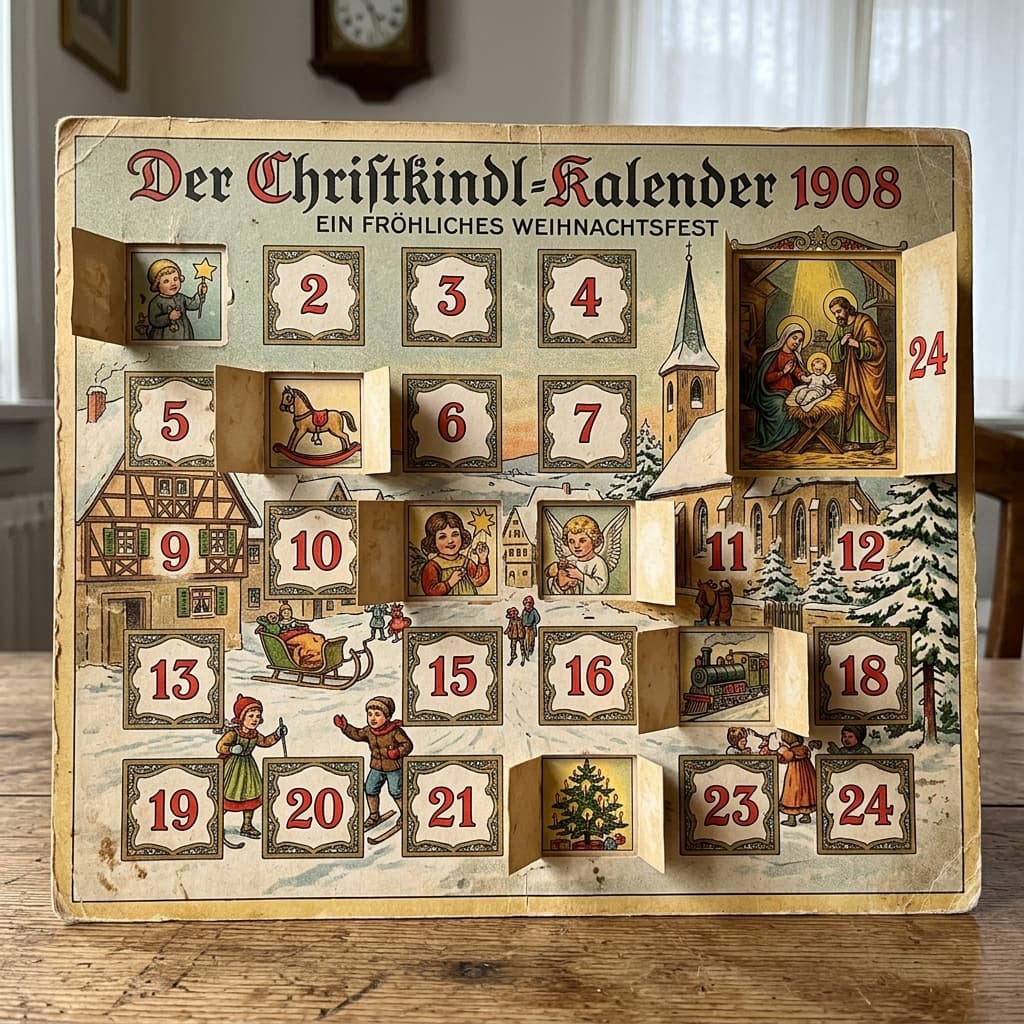
A vintage-style rendering of an early 20th-century German printed Advent calendar with daily countdown doors.
Is Advent the Same as a Christmas Countdown?
No. Advent is a Christian religious season, whereas a Christmas countdown is a calendar calculation measuring the remaining time to Christmas.
Liturgical Advent starts on a Sunday and changes length, whereas countdown tools can run at any time (even months in advance) and calculate exact days, hours, or seconds. An Advent calendar bridges the two: it is a visual countdown built around the tradition of Christmas preparation.
To track the exact time remaining, you can also use our weeks until Christmas countdown or calculate daily bedtimes with our sleeps until Christmas tool.
Myths vs. Facts in Advent History
Here are common myths and the historical realities surrounding the Advent season:
Historical Reality: The liturgical season of Advent always starts on the fourth Sunday before Christmas. This date fluctuates between November 27 and December 3. December 1 is simply the fixed starting date for commercial Advent calendars.
Historical Reality: While Advent always contains exactly four Sundays, the total calendar length varies between 22 and 28 days depending on the day of the week on which Christmas falls.
Historical Reality: Themes like 'Hope, Peace, Joy, Love' are highly popular in Western Protestant and Catholic churches, but their specific arrangement or names are not universally standardized across all traditions.
Historical Reality: Countdown customs began in Germany in the 19th century, but the first commercial printed Advent calendar was produced in 1908 by Gerhard Lang.
Advent Dates for the Next Several Years
Because Western Advent always starts on the fourth Sunday before Christmas, its beginning shifts each year:
| Year | First Sunday of Advent (Start) | Christmas Day (End of Advent on Dec 24) |
|---|---|---|
| 2026 | November 29 | December 25 |
| 2027 | November 28 | December 25 |
| 2028 | December 3 | December 25 |
| 2029 | December 2 | December 25 |
| 2030 | December 1 | December 25 |
Note: Liturgical Advent concludes at sundown on Christmas Eve. Track the calendar countdown leading to this date with our Christmas Eve countdown tool.
Frequently Asked Questions About Advent
Quick answers to the most common questions regarding Advent traditions and dates:
What is Advent in simple words?
Advent is the four-Sunday season before Christmas when many Christians prepare for and anticipate the celebration of Jesus' birth.
What does Advent literally mean?
Advent comes from the Latin adventus, meaning "coming" or "arrival."
How many days are in Advent?
The number of calendar days varies each year, ranging from 22 to 28 days, although Advent always contains exactly four Sundays.
Is Advent a Catholic tradition?
Advent is observed by Catholics, but it is not exclusively Catholic. Anglican, Lutheran, Methodist, and other Protestant traditions also observe Advent in various forms.
Do Orthodox Christians celebrate Advent?
Eastern Orthodox traditions observe their own pre-Christmas preparation called the Nativity Fast, which lasts 40 days starting November 15. See our Orthodox Christmas date guide for details.
Conclusion
Advent is a season of waiting, preparation, and hope leading to Christmas. It has four Sundays in the Western liturgical tradition, directing attention toward Christ's birth and return. Its traditions include wreaths, lit candles, printed calendars, music, and acts of charity.
The simplest way to think about it: Christmas is the celebration, while Advent is the preparation and anticipation that comes before.
Clara Sterling
Holiday Editor & HistorianClara Sterling is a cultural historian and lifestyle writer specializing in Christmas traditions, holiday folklore, and winter solstice celebrations.