
Why Do We Give Gifts at Christmas? History, Meaning & Traditions
Discover the history of Christmas gift-giving, from the biblical story of the Magi and Saint Nicholas to Victorian traditions, Santa Claus, and modern retail.
Christmas presents seem like one of the oldest parts of the holiday. Every December, families wrap gifts, place them under trees, fill stockings, and wait for Christmas morning.
But why do we give gifts at Christmas in the first place? The answer is more interesting than one simple tradition. Christmas gift-giving developed over many centuries. The story of the Magi is important, but so are Saint Nicholas, older winter customs, Victorian family traditions, and the rise of modern retail.
We give gifts at Christmas because several traditions came together over time. Christian tradition connects gift-giving with the Magi who brought gifts to Jesus, while Saint Nicholas traditions, older winter customs, Victorian family traditions, and modern culture also shaped the practice.
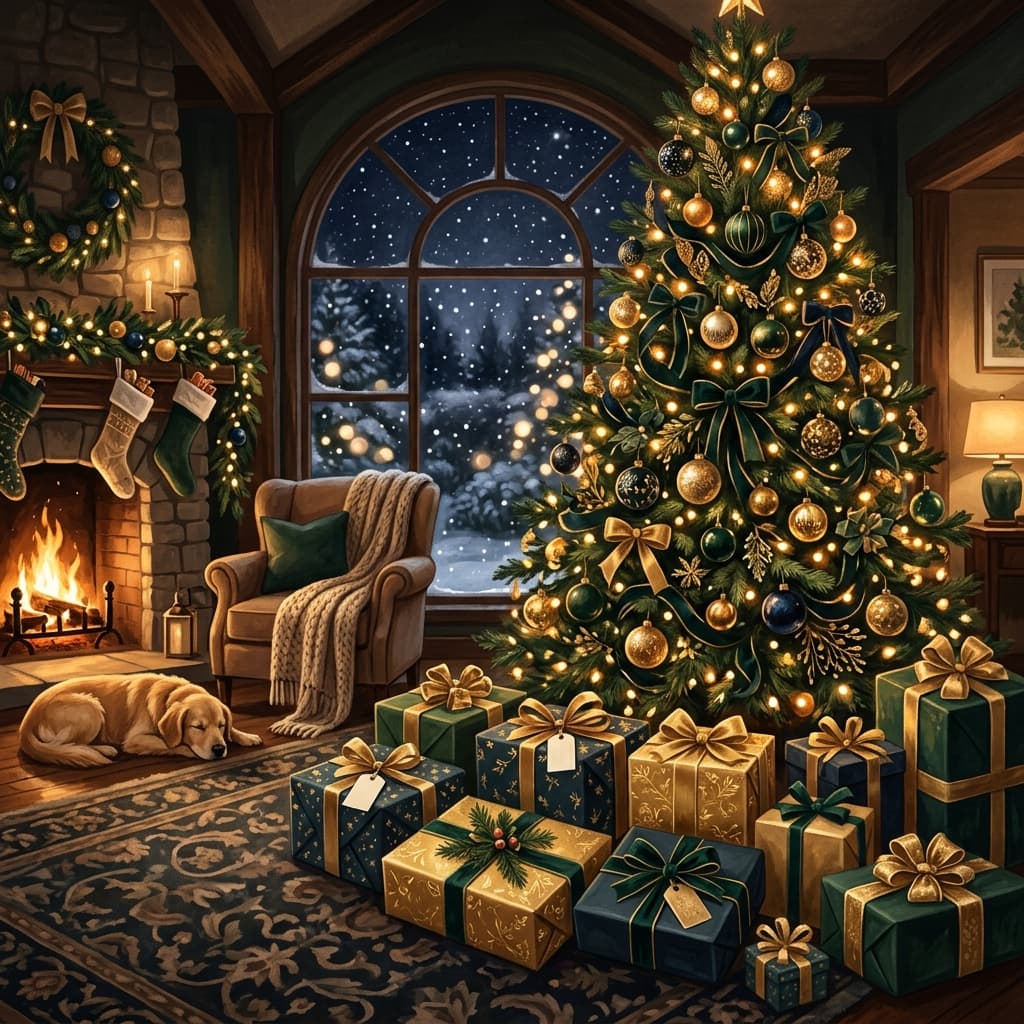
Christmas gifts placed under a decorated tree, representing a blend of centuries-old customs and modern family traditions.
Why Do We Give Gifts at Christmas?
Christmas presents do not have one single historical starting point. Instead, today's tradition is the result of different customs developing and blending over time. Christmas gift-giving is a rich cultural mosaic with ancient Roman, early Christian, medieval, and Victorian influences.
While Christian theology attaches the act of giving to the birth of Jesus Christ, historians note that winter seasonal gift exchanges were popular long before the establishment of Christmas on December 25.
Did the Three Wise Men Start the Tradition of Christmas Gifts?
The Three Wise Men helped give Christmas gift-giving a Christian meaning, but they did not invent the practice of exchanging gifts.
In the Gospel of Matthew, the Magi visit Jesus and present gold, frankincense, and myrrh. These were highly valuable items reserved for royalty and honor:
| Gift | Traditional Significance |
|---|---|
| Gold | Wealth, royalty, and kingship. |
| Frankincense | Worship, divinity, and priesthood. |
| Myrrh | Anointing, sacrifice, and mortality. |
This biblical account provided the theological justification for gift-giving, allowing Christians to frame their seasonal gift exchanges as a reflection of the gifts given to Jesus, or a reminder of God's ultimate gift to humanity.
How Ancient Winter Festivals Influenced Gift-Giving
Winter gift-giving was common in Europe long before the arrival of Christianity. In many ancient agricultural societies, the winter solstice marked the end of the harvest and the return of longer days.
What Was Saturnalia?
Saturnalia was an ancient Roman festival honoring the god Saturn, celebrated from December 17 to 23. It was a time of feasting, social role reversals, and gift-giving. Romans exchanged small gifts called sigillaria (clay figurines) and wax candles (symbolizing light returning).
Did Saturnalia Really Become Christmas?
No single piece of historical evidence shows that Saturnalia simply turned into Christmas. While the early Christian church placed Christmas on December 25 (which coincided with winter festivals and the Roman solstice), the transition was a slow, century-long process of cultural synthesis. The church adapted popular customs like feasting and gift exchange to carry Christian meanings rather than banning them entirely.
How Saint Nicholas Became a Christmas Gift-Giver
The modern Santa Claus is a central figure in Christmas gift-giving, but his legend started with a real historical bishop who lived in the late Roman Empire.
Who Was Saint Nicholas?
Saint Nicholas was a 4th-century Christian bishop of Myra, located in modern-day Turkey. He was known for his extensive charity and care for children and the poor. The most famous story involves him secretly throwing bags of gold through the window of a poor man's house to provide dowries for his three daughters, saving them from destitution.
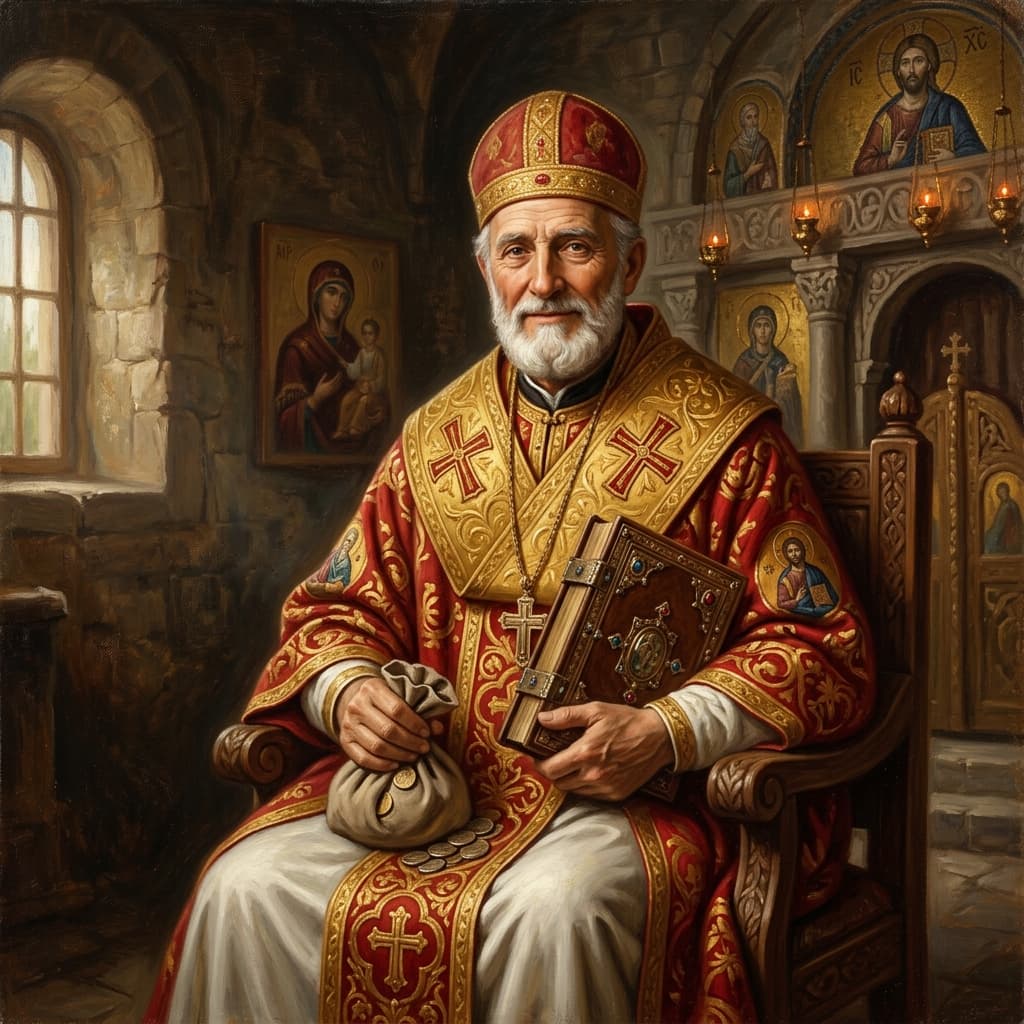
Byzantine-style portrait of Saint Nicholas, historically remembered for secret acts of generosity.
From Saint Nicholas to Sinterklaas
Over the Middle Ages, Nicholas's fame grew. In the Netherlands, he became known as Sinterklaas, a kind old man with a long white beard who rode a white horse and brought gifts to good children on the eve of his feast day (December 6).
How Sinterklaas Became Santa Claus
When Dutch settlers immigrated to North America in the 17th and 18th centuries, they brought the Sinterklaas tradition with them. In the melting pot of New York, English-speaking neighbors adapted the Dutch name phonetically to "Santa Claus," gradually moving his gift-giving appearance to Christmas Eve.
When Did Christmas Gift-Giving Become a Major Tradition?
Medieval Christmas Gift-Giving
During the Middle Ages, gift-giving was not centered on December 25. Instead, gifts were exchanged on New Year's Day (associated with Roman traditions), Saint Nicholas Day (December 6), or Epiphany (January 6, representing the arrival of the Magi).
Christmas Gifts for Children
During the Protestant Reformation in the 16th century, the veneration of saints was discouraged. Martin Luther shifted the gift-giver in Germany to the Christkind (Christ Child) and moved the gift exchange to Christmas Day to keep the focus on Jesus.
The Victorian Christmas Revolution
The modern family-centered Christmas took shape in the mid-19th century. As the Industrial Revolution made mass-produced toys cheaper and middle-class wealth grew, parents began buying gifts specifically for their children, establishing Christmas as a private, domestic family celebration.
How the Victorians Changed Christmas Presents
Before the 1800s, Christmas was often a rowdy public festival marked by drinking and street carousing. The Victorians repositioned it inside the home, placing children at the center of the holiday.
Popular literature, notably Charles Dickens's 1843 novella A Christmas Carol, emphasized generosity, family, and charity. Rather than servants giving gifts to masters (an old feudal custom), the Victorian trend shifted to parents giving toys to children.
The Victorian era also saw the birth of the history of Christmas cards, another major holiday tradition created in 1843 by Sir Henry Cole as a practical way to reply to seasonal mail.
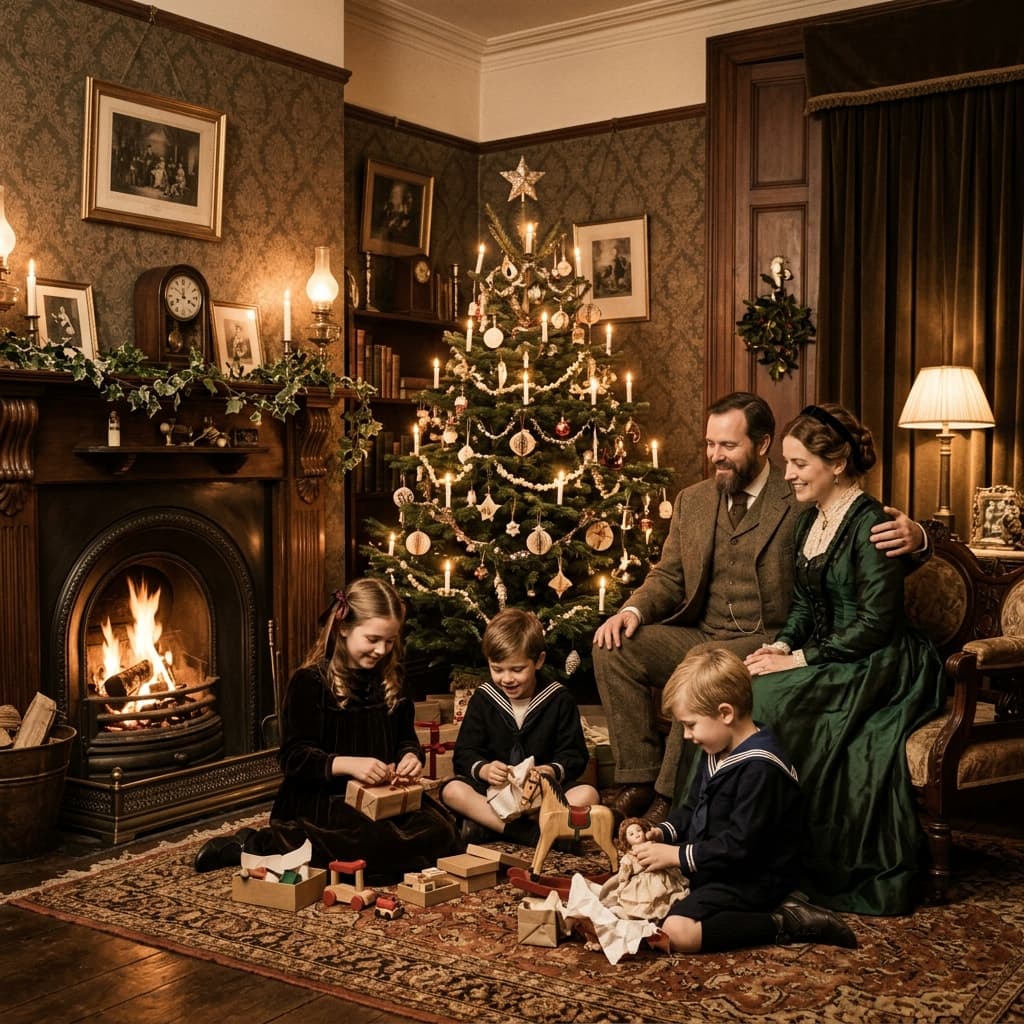
Victorian family gathered around a Christmas tree, popularizing the domestic gift-giving scene.
Why Do We Put Christmas Gifts Under the Tree?
German settlers brought the Christmas tree custom to Britain and America. In 1848, a drawing of Queen Victoria, Prince Albert, and their children around a decorated Christmas tree at Windsor Castle was published. This illustration went viral, and families on both sides of the Atlantic copied the setup.
Originally, small gifts were hung from the branches of the tree. As gifts became larger and heavier (due to manufactured board games, books, and metal toys), they were moved to the floor, placed under the branches.
Why Do We Wrap Christmas Presents?
Wrapping presents turns a mass-produced product from a store into a personal, intimate gesture. Removing the price tag and hiding the object in paper creates anticipation, mystery, and surprise.
In the late 19th century, gifts were wrapped in simple brown paper or colored tissue. In 1917, the Hall Brothers (founders of Hallmark) ran out of tissue paper at their store and began selling decorated French envelope lining sheets instead. It sold out instantly, creating the modern wrapping paper industry.
Why Do Some People Exchange Gifts on Christmas Eve?
Opening gifts is not restricted to Christmas morning. Depending on regional culture, Christian denomination, and local history, people open gifts on different dates throughout December and January:
| Culture/Country | Primary Gift-Giving Date |
|---|---|
| United States & UK | Christmas Morning (Dec 25) |
| Germany, Scandinavia, Poland | Christmas Eve (Dec 24) |
| Netherlands, Belgium | Saint Nicholas Eve (Dec 5) or Day (Dec 6) |
| Spain, Latin America | Three Kings Day / Epiphany (Jan 6) |
| Italy | Epiphany Eve (Jan 5) by La Befana (the gift-giving witch) |
| Ethiopia & Orthodox Cultures | Ganna (Jan 7) — focus is on church, simple clothes are given |
Why Christmas Gifts Became Commercial
As mass production accelerated in the late 19th and early 20th centuries, retailers realized the immense economic potential of the holiday. Department stores began creating themed window displays, advertising "must-have" toys, and establishing the tradition of visiting Santa in-store.
While commercialization is sometimes criticized for turning a sacred holiday into a consumer rush, it is also what allowed the tradition to survive and spread. In modern society, buying a gift is often a way to express affection, gratitude, and to reinforce social bonds.
What Is the Real Origin of Christmas Gift-Giving?
To summarize the history, there is no single origin of Christmas gift-giving. Instead, the tradition is an accumulation of customs across different historical eras:
| Period | Key Contribution |
|---|---|
| Ancient Rome | Solstice winter gift exchanges (Saturnalia). |
| 1st Century | The story of the Magi provides a theological foundation. |
| 4th Century | Saint Nicholas connects gift-giving with charity and children. |
| Middle Ages | Customs of saint-day gift exchanges spread throughout Europe. |
| Protestant Reformation | Gifts are redirected to Christmas Day, shifting the focus to Jesus. |
| Victorian Era | Christmas becomes a private, domestic family holiday; toys under the tree grow popular. |
| 20th Century | Mass media and retail commercialize Santa Claus and wrapping paper. |
2,000-Year Christmas Gift-Giving Timeline
Follow the historical journey of gift-giving through the ages:
Saturnalia celebrations
Winter festivals such as Saturnalia included gift-giving, where friends exchanged clay figurines and wax candles to honor Saturn.
The Magi's Gifts
The Christian Nativity tradition describes the Wise Men bringing gold, frankincense, and myrrh to baby Jesus in Bethlehem.
Saint Nicholas of Myra
Saint Nicholas, a Christian bishop in modern-day Turkey, becomes legendary for his anonymous generosity and secret gift-giving.
Saint Nicholas Customs Spread
The reputation of Saint Nicholas spreads across Europe. Children begin receiving coins and treats on his December 6 feast day.
European Gift Customs Shift
Protestant Reformation changes redirect gift-giving in some regions from Saint Nicholas Day (Dec 6) to Christmas Eve or Christmas Day.
Victorian Revival
The Industrial Revolution makes toys affordable. Gift-giving transforms into a central domestic family custom in Britain and America.
'A Visit from St. Nicholas'
The famous poem (known as 'The Night Before Christmas') is published, popularizing Santa Claus delivering toys on Christmas Eve.
'A Christmas Carol'
Charles Dickens publishes his novella, reinforcing the cultural connection between Christmas, charity, and generosity.
Department Stores Rise
American department stores like Macy's begin promoting Christmas shopping with large window displays and Santa visits.
Mass Advertising
Mass advertising and media popularize Santa Claus globally, cementing Christmas gift-giving as a major economic and cultural event.
A Global Tradition
Christmas gift-giving is practiced in many different forms around the world, representing love, connection, and family ties.
How to Explain Christmas Gift-Giving to Children
If a child asks you, "Why do we get presents on Christmas?" it is helpful to keep it warm, simple, and meaningful without overcomplicating the ancient history:
"We give gifts at Christmas for two beautiful reasons. First, it reminds us of the story of the Three Wise Men, who brought gifts to celebrate the birth of baby Jesus. Second, Christmas is a special time of year to show our family and friends how much we love them. Giving a present is a small way of saying 'I care about you, and I am glad you are in my life.'"
Did You Know?
🎁 Changing Dates
Christmas presents were not always opened on Christmas morning. Different cultures developed different dates, including Saint Nicholas Day, Christmas Eve, and Epiphany.
🎄 Victorian Tree Origin
The Victorian era helped shape the Christmas tree layout. An illustration of Queen Victoria's family around the decorated tree in 1848 popularised putting gifts beneath it.
🎅 Santa's Ancestry
Santa Claus has several cultural ancestors: Saint Nicholas, Dutch Sinterklaas, English Father Christmas, and early American literature.
🛍️ Department Stores
Christmas shopping became commercialized in the US during the late 19th century when department stores used window displays to market manufactured goods as gifts.
Frequently Asked Questions
Why do we give gifts at Christmas?
We give gifts at Christmas because several traditions came together over time. Christian tradition connects gift-giving with the Magi, while Saint Nicholas traditions, older winter customs, Victorian family Christmas and modern culture also shaped the practice.
Did the Three Wise Men start Christmas gift-giving?
No. The Magi gave gifts to Jesus, and their story became an important Christian model for Christmas gift-giving. But people exchanged gifts in other cultures before Christmas existed.
What gifts did the Wise Men give Jesus?
According to Matthew's Gospel, the Magi brought gold, frankincense, and myrrh.
Did Christmas presents come from Saturnalia?
Saturnalia included Roman gift-giving, but it is too simplistic to say that Christmas presents directly came from Saturnalia. Modern Christmas gift-giving developed through multiple religious and cultural traditions.
Is Santa Claus based on Saint Nicholas?
Yes, Saint Nicholas is one of the major historical and legendary figures behind Santa Claus. The modern Santa developed through European traditions such as Sinterklaas and later American culture.
When did Christmas gift-giving become popular?
Gift-giving became increasingly important during the medieval and early modern periods, but the Victorian era was especially important in creating the family-centered Christmas and children's gift traditions familiar today.
Why are Christmas gifts placed under the tree?
The tradition developed alongside the growing importance of the Christmas tree as a family decoration. As trees became central to Christmas celebrations, gifts became associated with the space beneath them.
Why do we wrap Christmas presents?
Wrapping creates surprise and anticipation. It also helps transform a store-bought product into a personal gift chosen for someone specific.
Why do some people open presents on Christmas Eve?
Gift-opening traditions vary by country and family. Some cultures traditionally exchange gifts on Christmas Eve, while others prefer Christmas morning, Saint Nicholas Day or Epiphany.
Do all Christians give gifts at Christmas?
No. Christmas traditions differ among Christian communities and cultures. Gift-giving is important in many communities, but it is not practiced identically everywhere.
What is the real meaning of Christmas gifts?
For many people, Christmas gifts represent love, generosity, gratitude and connection. For Christians, gift-giving can also point toward the Nativity and God's gift of Jesus.
Why has Christmas become so commercial?
Mass production, department stores, advertising and consumer culture made Christmas shopping increasingly important, especially in the United States.
Conclusion
Why do we give gifts at Christmas? There is no single answer. The tradition grew from several layers of history: the Christian story of the Magi, traditions surrounding Saint Nicholas, older seasonal customs, Victorian family culture and modern commercial Christmas.
The most useful way to understand Christmas gifts is not to focus only on the price or the package. A present can be a simple way to express love, gratitude or generosity. Whether a family gives one small gift or many presents, the meaning comes from the relationship behind the gift.
Explore More Holiday Research Guides
Countdown Christmas covers the full spectrum of holiday origins, planning, and cultural traditions:
From 4th-century Saint Nicholas to Sinterklaas and the modern American Santa.
How a Central European tradition became a global symbol of the holiday season.
Take a global tour of diverse Christmas customs across different cultures.
Discover who created the first Christmas card in 1843 and why the tradition spread.
Return to the live countdown calendar showing days until Christmas.
Clara Sterling
Holiday Editor & HistorianClara Sterling is a cultural historian and lifestyle writer specializing in Christmas traditions, holiday folklore, and winter solstice celebrations.